DMMC
A mobile bartending company that needed a booking product, not a website. Bar type, guest count, live pricing, add-ons, deposit. All of it without a single phone call.
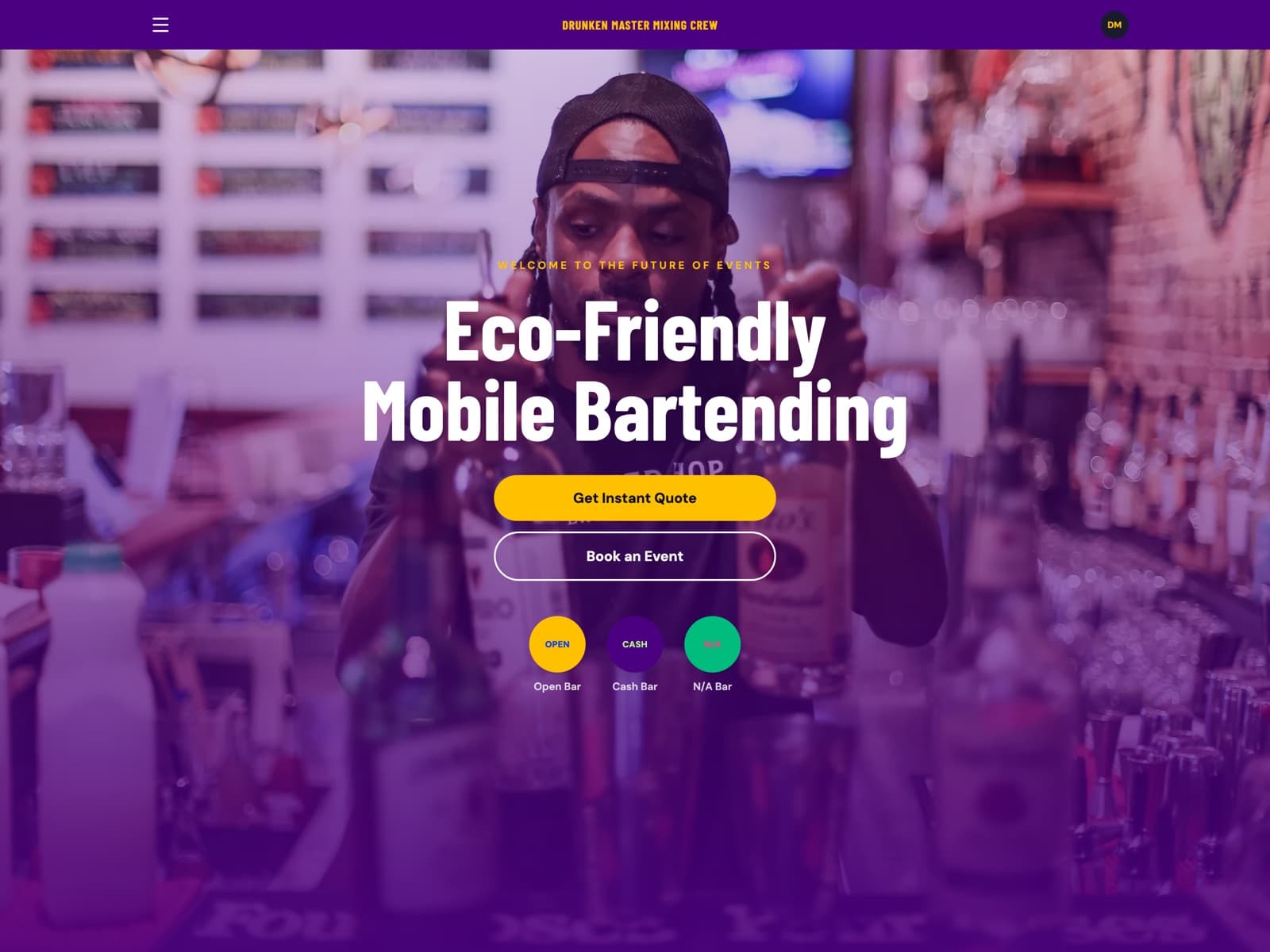
They needed a product, not a page.
Drunken Master Mixing Crew is a mobile bartending company in Atlanta. They needed more than a website. They needed a full booking experience. Bar type, guest count, live pricing, add-ons, deposit. All of it, without a single phone call.
As the sole designer and developer I owned every layer. Research, UX, visual design, frontend development, and launch. A two and a half week sprint, built with Next.js and TypeScript, designed mobile first, live now.
Two and a half weeks, one person.
Sole designer and developer. Research, UX, visual design, frontend development, and launch. Two and a half weeks, mobile first, Next.js and TypeScript.
People left when they could not get a price.
I started by mapping their existing booking flow. Every DM, every back and forth text. The pattern was clear. Clients dropped off the moment they could not get a price on their own terms.
No self-serve pricing. Clients had no way to see what an event would cost without starting a conversation first.
Manual booking overhead. Every booking required back and forth to gather the same information. How many guests, what type of bar, how long, what date.
No brand presence online. The brand had serious energy in person. Online there was almost nothing to show for it.
Six steps, one decision each.
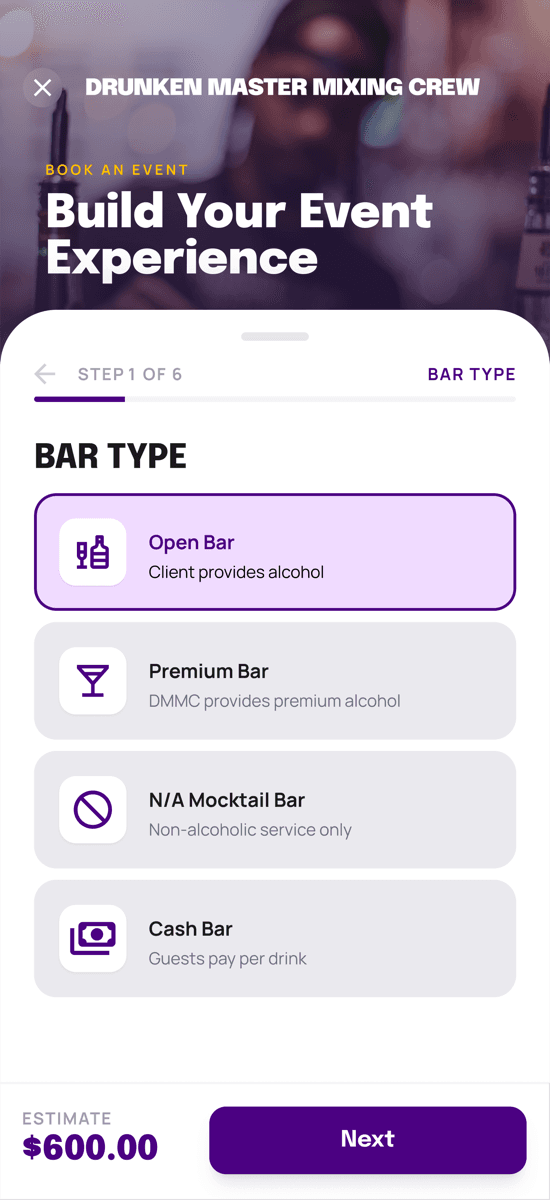
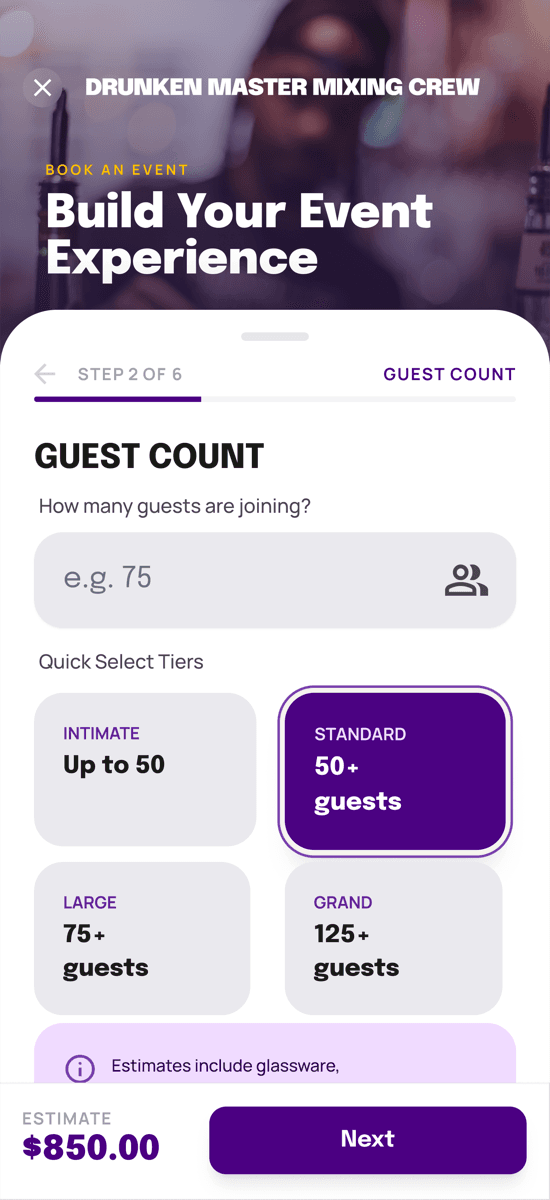
A six-step flow designed around progressive disclosure. Each step collects one decision, updates the live estimate, and moves forward.
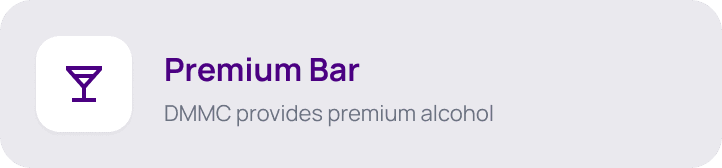
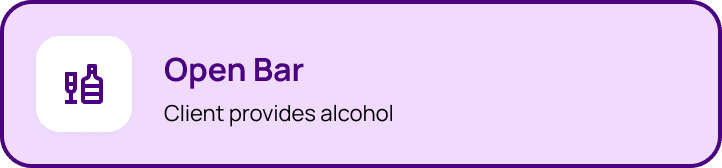
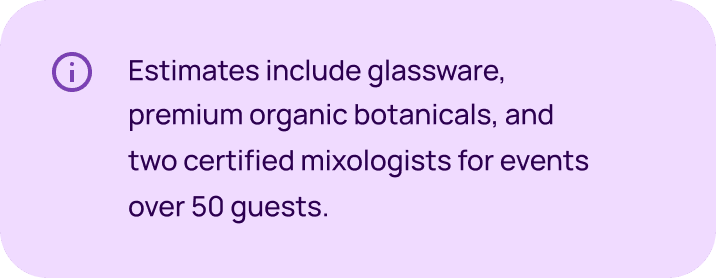
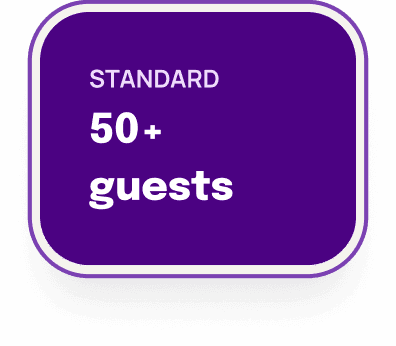
Bar type selection uses cards instead of a dropdown, because clients need to understand what each option means. Guest count uses quick-select tiers, because most clients think in ranges. The duration stepper enforces the four-hour minimum without a separate validation error. Add-on toggles with live pricing let clients experiment without commitment anxiety. Free-text fields for special requests come last, when the client is already invested.
Every choice feeds a live quote that updates in real time. No waiting, no callbacks, no guesswork.
Zero to booked in three minutes.
Zero to booked in under three minutes, replacing two to three days of back and forth.
The phone call bottleneck is gone. Clients who previously went quiet after the first DM now complete bookings on their own.
The platform handles intake around the clock so the crew can focus on execution rather than scheduling.
The best flow is the one nobody notices.
Concept to launch in two and a half weeks. One person, design and code. Every screen had to earn its place. The booking flow was the product. Everything else was packaging.
The biggest takeaway is that the best booking experience is the one people do not think about. They just move through it and end up booked. Making complexity invisible is what I bring to every product I touch.