DesignPull Studio
The hosted answer to a CLI that assumed you already spoke token. Pick colours, type, and spacing in the browser, push to Figma, export production code.
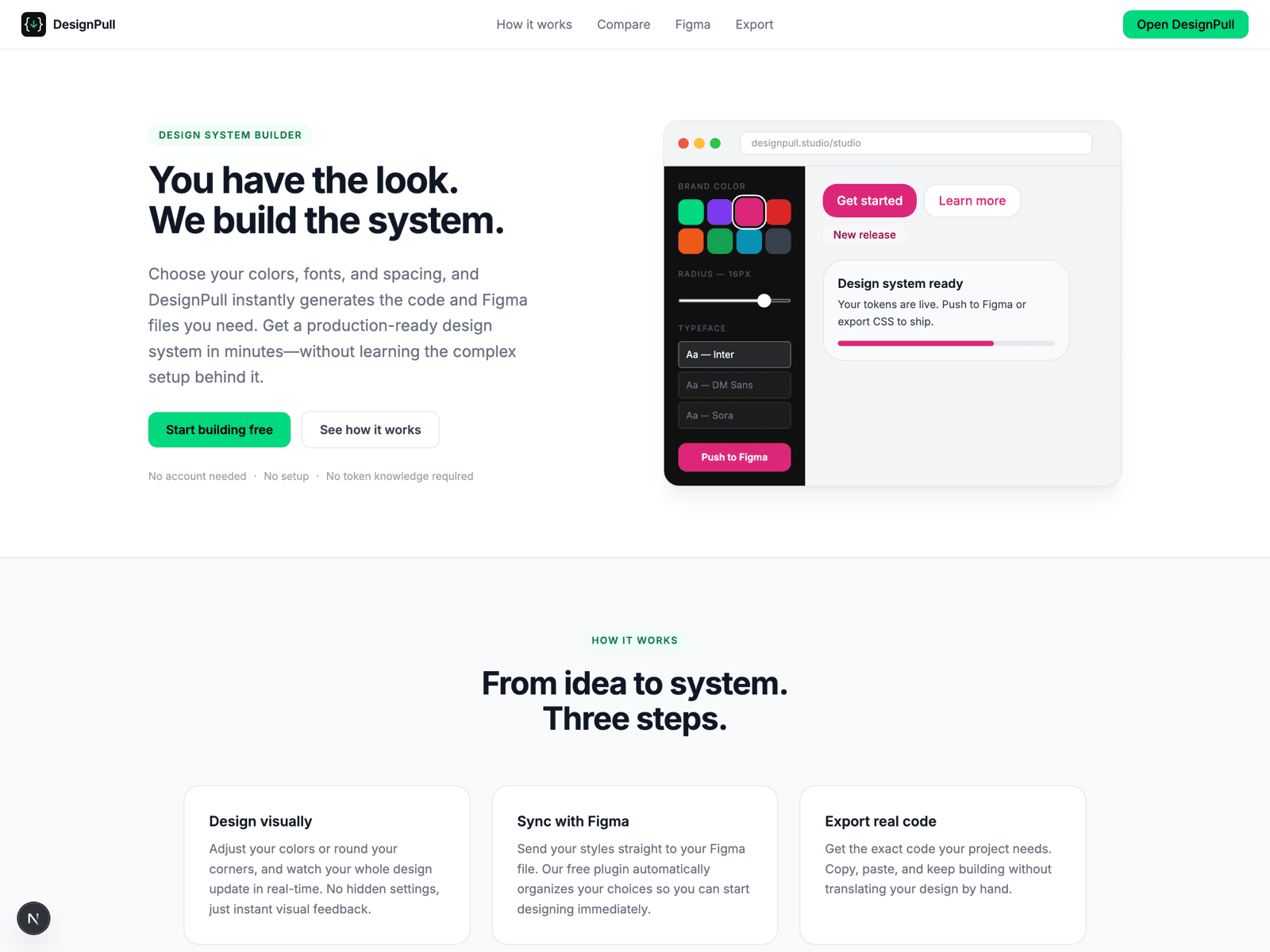
A design system without the vocabulary.
The CLI worked, and it assumed you already knew what a design token was. Most people who need a design system do not.
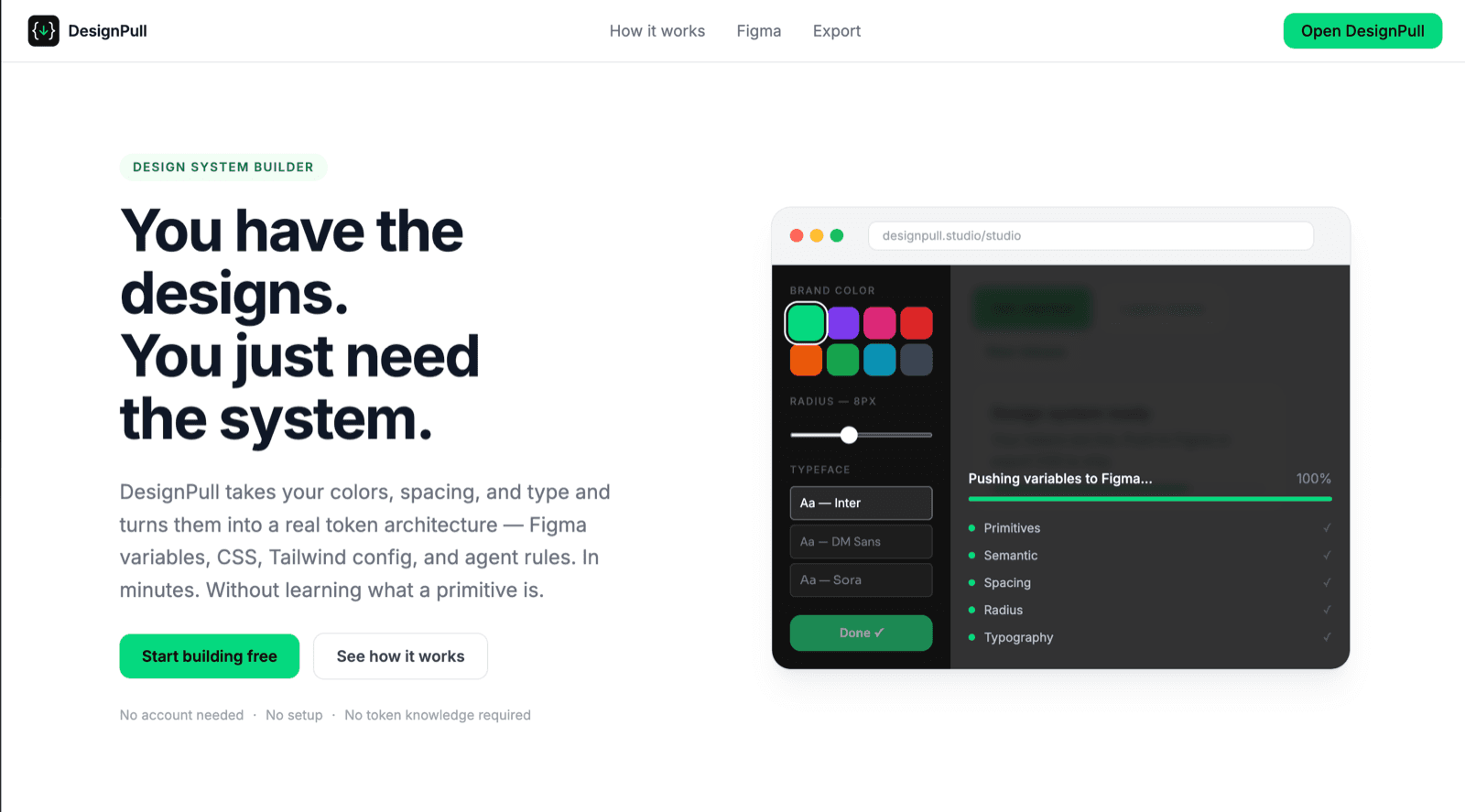
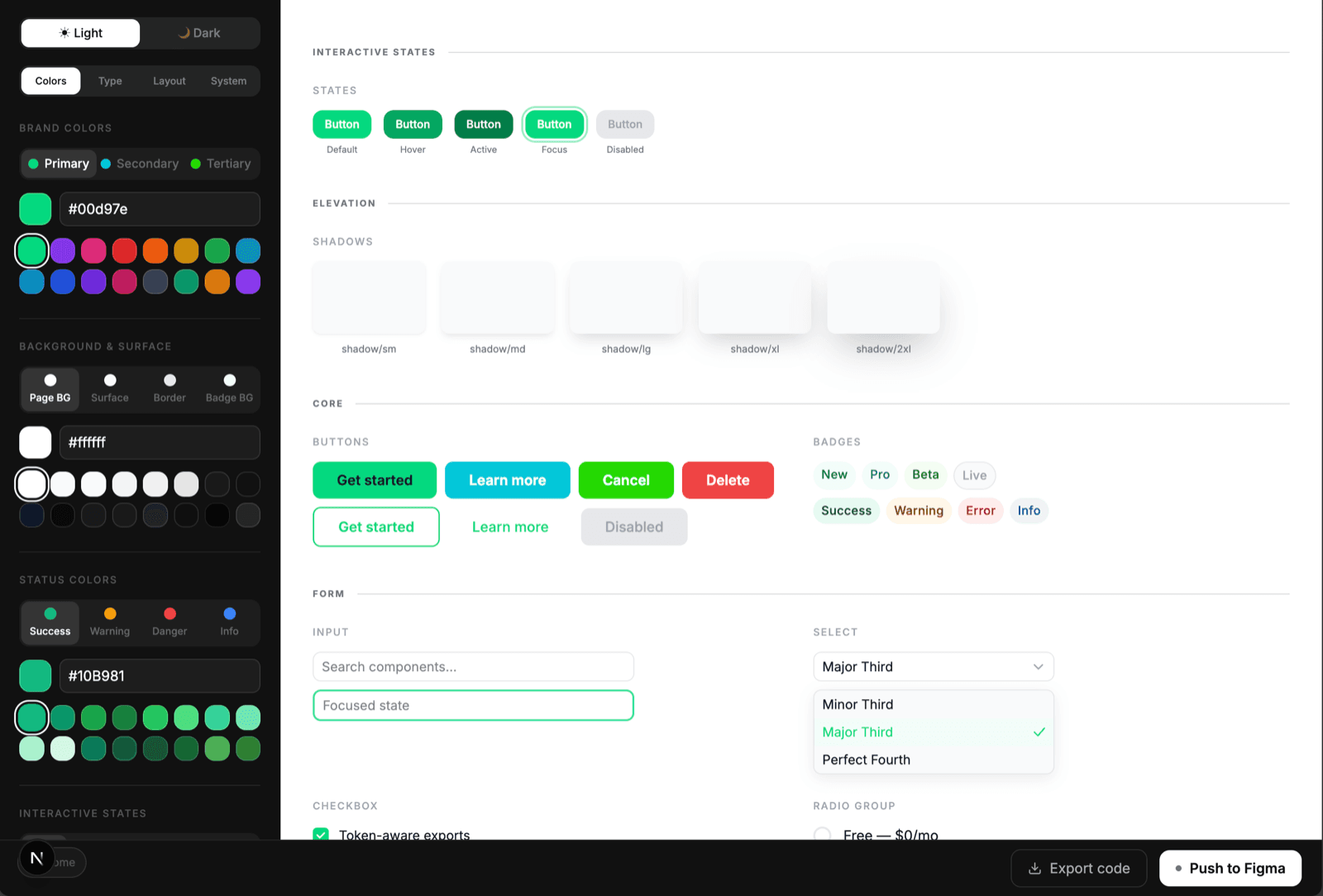
Studio is the hosted answer. Pick colours, type, and spacing in the browser, watch a live preview, push the result to Figma, and export production code an AI assistant can read.
Strategy through billing.
Sole designer and engineer. Product strategy, interface design, the Figma bridge, auth, billing, and the full Next.js build.
Build the whole thing before signing in.
Let people build the whole thing before asking for anything.
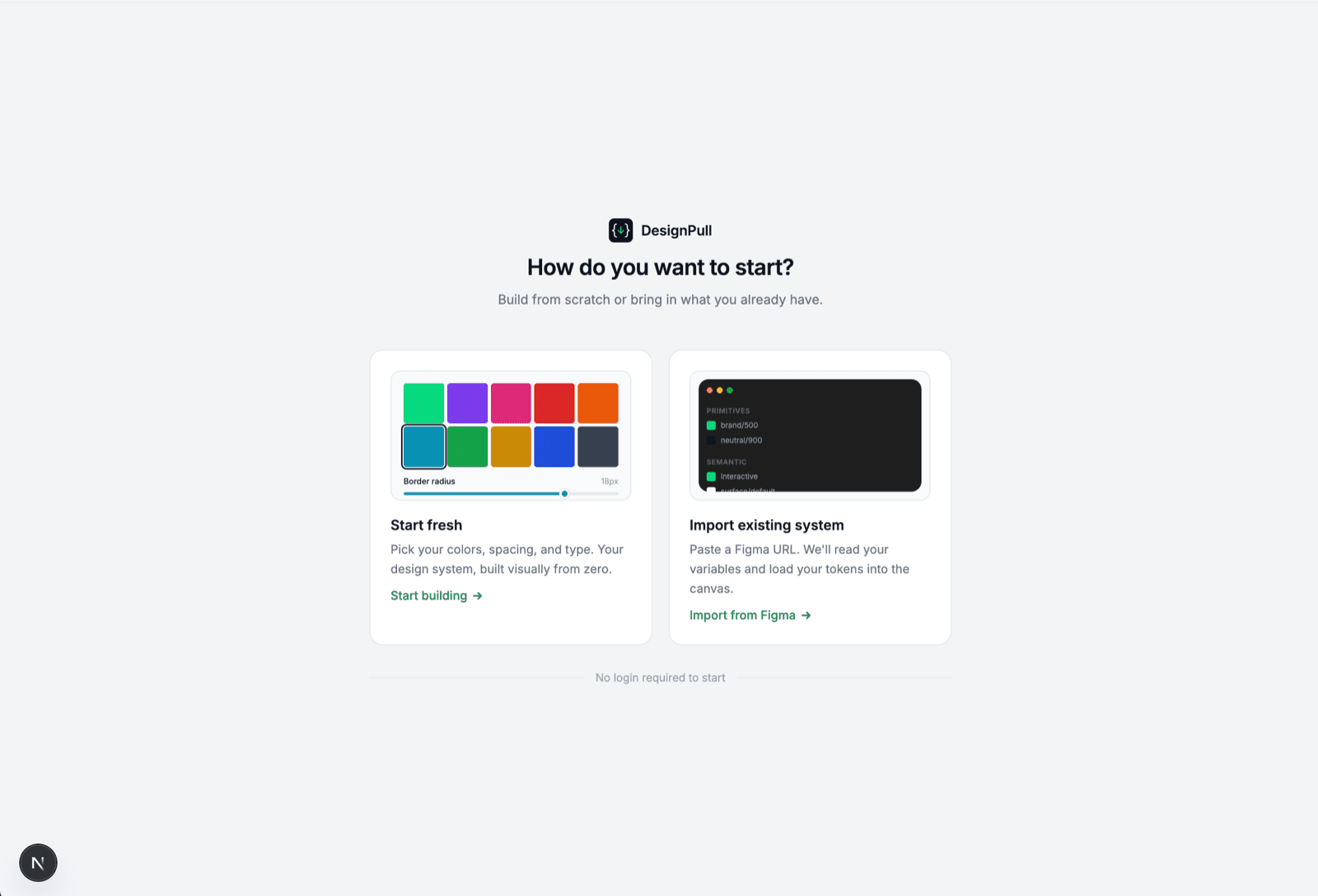
The builder works with no login, no setup, and no account. You can configure a complete system, watch the preview update, and check your contrast before the product has any idea who you are. Signing in only matters when you want to keep the result or push it to Figma.
The cost is real. Anonymous sessions need their own persistence path, the state has to survive a refresh without a user record behind it, and analytics get blurrier because a large share of the value goes to people you cannot identify. I took that trade because a tool whose whole pitch is removing friction cannot open with a signup wall.
Output an assistant can read.
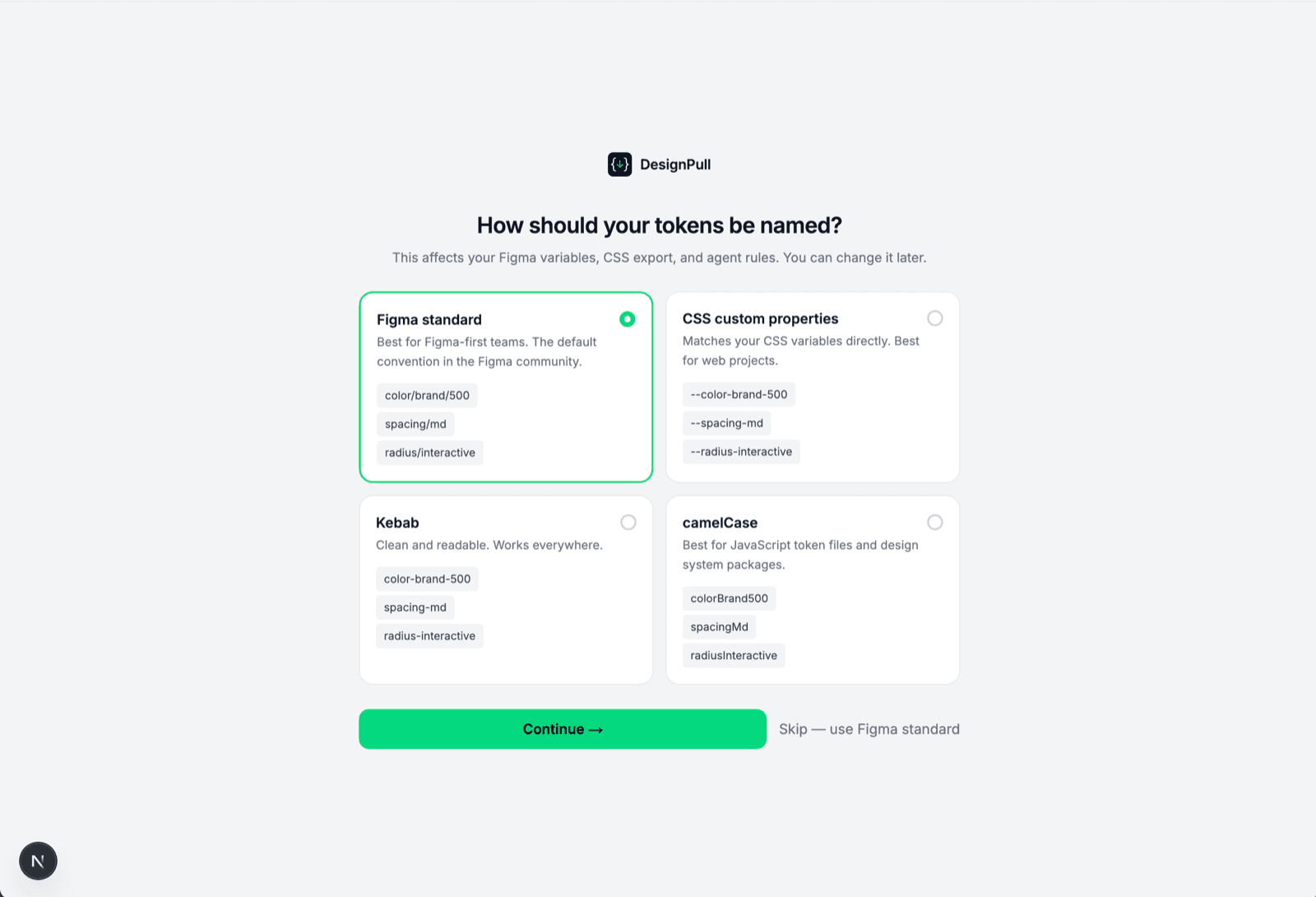
The export is shaped for an assistant to read, not just a person. A design system is only enforced if the thing writing the code knows about it, and most code now has Claude, Cursor, or Copilot somewhere in the loop. The output is plain context those tools consume directly.
The Figma bridge goes both ways. Existing variables can be read in, so a team with a half-built system is not asked to start over. That was the single most common reason the CLI got abandoned after one use.
Contrast checking runs inside the builder rather than as a later audit, so an inaccessible pairing is visible the moment you pick it.
Pricing is still an open question.
Pricing. It is free during beta, and that is a genuine open question rather than a launch tactic. I do not yet know whether this is priced per seat, per system, or as part of something larger, and guessing would shape the product around the wrong thing.
The comparison pages against the established tools in this space are written and live, which forced a useful exercise. Saying plainly what this does not do. It is not a documentation platform and it is not trying to be.